Affirmative Therapy: What it means and Why LGBTQAI+ Clients Need It
14th March, 2026 | By:Saashrika G
Mental health care is often described as a space where people can show up exactly as they are, without fear of judgment, shame, or misunderstanding. But in reality, this experience is not always the same for everyone. For many individuals in the LGBTQ+ community, entering a therapy room can come with its own set of worries: Will my therapist understand my identity? Will I have to explain or justify who I am?
Will I be accepted here? These concerns are not groundless. Many queer individuals have historically encountered stigma, discrimination, or subtle invalidation in different parts of society, including healthcare and mental health settings. When therapy is meant to be a place of safety, even small moments of misunderstanding can make it difficult for clients to feel truly seen or supported.
This is where affirmative therapy becomes especially important. Affirmative therapy moves beyond simply being neutral about LGBTQ+ identities. Instead, it actively acknowledges and validates them as natural, healthy, and meaningful aspects of a person’s life. It recognizes that queer individuals often navigate unique social challenges, and that therapy should not ignore these realities but thoughtfully engage with them.
By creating a space that is informed, respectful, and affirming, therapists can help LGBTQ+ clients feel safe enough to explore their experiences, process challenges, and build self-acceptance. In doing so, affirmative therapy plays a crucial role in making mental health care truly inclusive, ensuring that every person who walks into the therapy room feels understood, respected, and supported in their journey.
Understanding LGBTQAI+: A Brief Overview
The acronym LGBTQ+ refers to a diverse group of individuals whose sexual orientation, gender identity, or gender expression differs from heterosexual and cisgender norms. The acronym commonly includes:
- Lesbian: Women attracted to women
- Gay: Individuals attracted to the same gender
- Bisexual: Attraction to more than one gender
- Transgender: Individuals whose gender identity differs from the sex assigned at birth
- Queer / Questioning: People exploring or identifying outside traditional sexual or gender categories
- Intersex: People born with natural variations in sex characteristics (such as chromosomes, hormones, or anatomy) that do not fit typical definitions of male or female bodies.
- Asexual: Individuals who experience little or no sexual attraction to others. Some asexual individuals may still experience romantic attraction.
- + : Represents many other identities such as genderfluid, pansexual, and nonbinary individuals
While the LGBTQ+ community is diverse, many individuals share experiences related to social stigma, discrimination, family rejection, identity exploration, and minority stress, all of which can impact mental health.
What is Affirmative Therapy?
Affirmative therapy is a therapeutic approach that recognizes, validates, and supports LGBTQ+ identities as natural and healthy variations of human experience. Rather than viewing sexual orientation or gender identity as pathological, affirmative therapy emphasizes respect, acceptance, and understanding of the diverse ways in which people experience identity, relationships, and self-expression (American Psychological Association, 2021).
Historically, LGBTQ+ identities were often misunderstood or pathologized within psychological and medical frameworks. Earlier mental health practices sometimes attempted to “correct” or suppress non-heteronormative identities through harmful practices such as conversion therapy. Contemporary psychological research and professional guidelines strongly reject these approaches and instead advocate for affirming and inclusive therapeutic practices that respect sexual and gender diversity (American Psychological Association, 2012).
Affirmative therapy acknowledges that the mental health challenges experienced by many LGBTQ+ individuals are not caused by their identity itself, but often arise from social factors such as discrimination, stigma, rejection, and marginalization. These experiences are conceptualized within the Minority Stress Model, which explains how chronic exposure to prejudice, social exclusion, and internalized stigma can contribute to higher levels of psychological distress among sexual and gender minority individuals (Meyer, 2003).
Within this framework, affirmative therapy aims to help clients process these experiences, develop coping strategies, and cultivate a stronger sense of self-acceptance and resilience. Some of the key principles that guide affirmative therapy include:
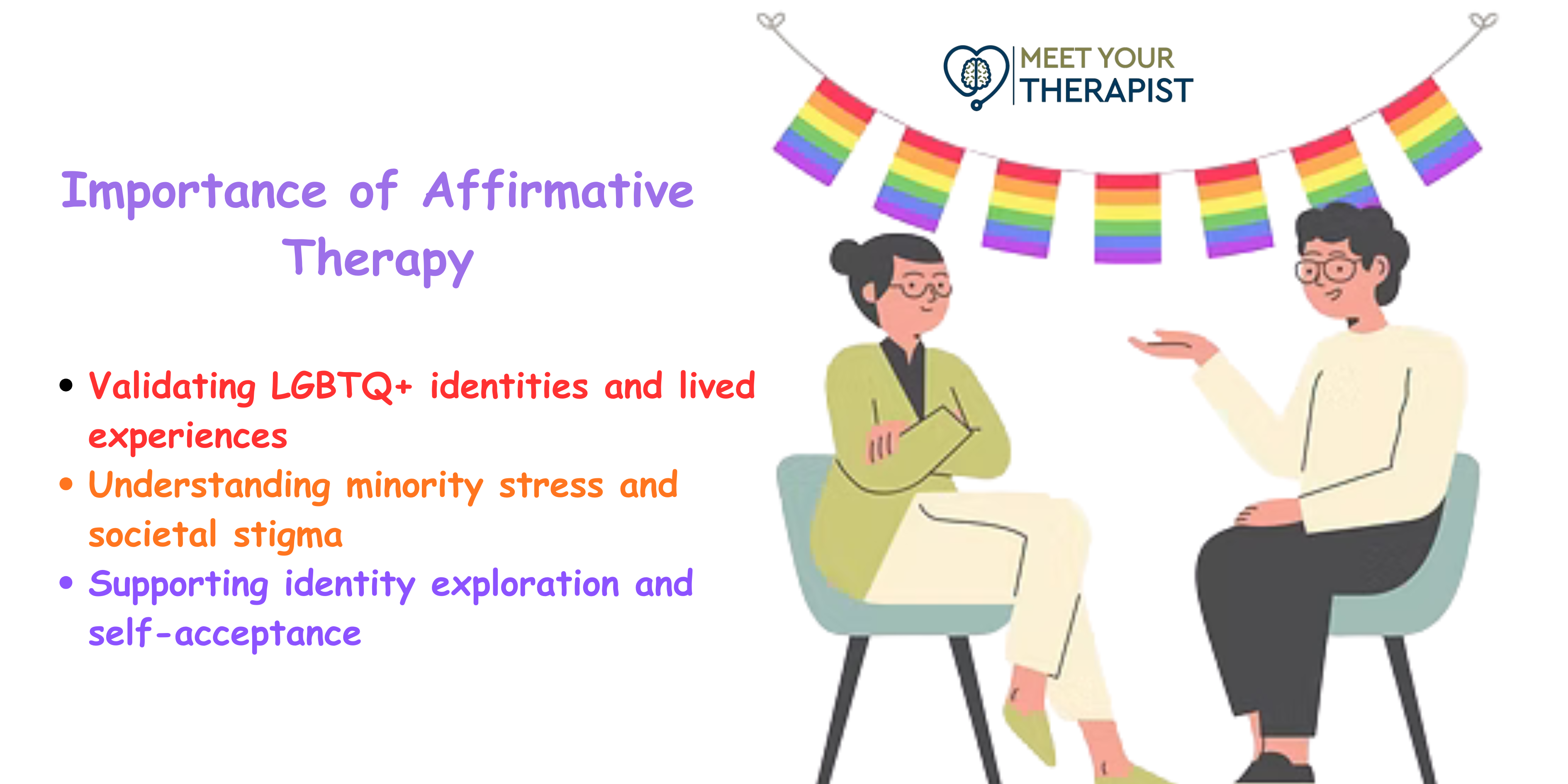
- Validating LGBTQ+ identities and lived experiences: Affirmative therapists recognize that sexual orientation and gender identity are integral aspects of a person’s identity. Therapy involves validating these experiences and acknowledging the impact that societal attitudes may have on an individual’s wellbeing.
- Understanding minority stress and societal stigma: Therapists consider how systemic discrimination, microaggressions, and social marginalization can affect mental health.Recognizing these broader social influences allows therapy to address both individual and contextual factors.
- Supporting identity exploration and self-acceptance:Affirmative therapy provides a safe, non-judgmental space where clients can explore gender identity and sexual orientation of themselves without pressure or assumptions.
- Addressing internalized stigma and discrimination: Repeated exposure to negative societal messages may lead individuals to internalize feelings of shame, guilt, or self-criticism.
- Creating inclusive and culturally competent therapeutic environments: This may involve using inclusive language, respecting pronouns, understanding intersectionality, and demonstrating knowledge of LGBTQ+ experiences and concerns.
It is important to note that affirmative therapy is not a separate therapeutic modality like Cognitive Behavioral Therapy (CBT) or psychodynamic therapy. Instead, it is a framework or stance that informs how therapists practice therapy across different approaches. A therapist may use CBT, humanistic, or psychodynamic techniques while still maintaining an affirming perspective toward LGBTQ+ identities (Bieschke, Perez, & DeBord, 2007).
Neutral vs. Affirmative Therapy: What’s the Difference?
Many therapists aim to remain “neutral,” believing that neutrality helps maintain objectivity. However, when working with marginalized communities, neutrality may unintentionally overlook the impact of social stigma and discrimination on a client’s mental health.
Neutral therapy may treat LGBTQ+ identity as just one background factor, focus mainly on presenting symptoms, and avoid discussing sexuality or gender identity unless the client raises it
Affirmative therapy, on the other hand, actively acknowledges the role of sexual orientation and gender identity in a person’s life. It recognizes how stigma, discrimination, and social structures affect mental health and encourages open conversations about identity, relationships, and community.
Why LGBTQ+ Clients Need Affirmative Therapy
LGBTQ+ individuals often face unique stressors such as discrimination, stigma, and social rejection, which can significantly affect mental health. Research shows higher rates of anxiety, depression, and psychological distress among sexual and gender minority individuals, largely due to these social challenges rather than their identity itself. Affirmative therapy supports LGBTQ+ clients by:
- Validation of identity – Helping individuals feel accepted and develop self-acceptance when their identity has been questioned or rejected.
- Support for identity exploration – Providing a safe space for individuals who may be questioning their sexual orientation or gender identity.
- Addressing minority stress – Helping clients process experiences of stigma, discrimination, and social exclusion.
- Healing internalized stigma – Challenging feelings of shame or self-criticism that may develop due to negative societal messages.
Someone with high emotional sensitivity may notice subtle changes in social interactions that others might overlook a shift in tone, a pause in conversation, or a delay in responding to a message. Because the emotional system is highly responsive, these cues can quickly trigger powerful emotional reactions.
Once the emotion is activated, the experience may feel intense and consuming. Anger may feel explosive, sadness may feel overwhelming, and anxiety may escalate rapidly. Finally, it often takes longer for the emotional system to calm down again. Even after the original situation has passed, the emotional response may continue for hours or longer. This pattern can make daily life feel emotionally unpredictable and exhausting.
Common Issues LGBTQ+ Clients Bring to Therapy
While concerns vary, some themes frequently emerge in therapy with LGBTQ+ clients
- Identity exploration – Clients may seek support while understanding or questioning their sexual orientation or gender identity.
- Coming out and disclosure – Deciding whether and how to disclose one’s identity to family, friends, or colleagues can be emotionally complex.
- Family and relationship challenges – Some individuals experience rejection or misunderstanding from family members or seek support in navigating relationships
- Minority stress and discrimination – Experiences of homophobia, transphobia, or microaggressions can affect emotional wellbeing.
- Internalized stigma – Negative societal messages may lead to shame, guilt, or self-criticism.
- General mental health concerns – LGBTQ+ individuals may seek therapy for anxiety, depression, trauma, or relationship issues, which may intersect with identity-related stressors.
The Role of the Therapist: Supporting the Whole Person
Affirmative therapy focuses on supporting clients as whole individuals rather than reducing them to their struggles or identities.
Therapists can support LGBTQ+ clients by encouraging self-acceptance, exploring identity with openness and respect, addressing the impact of discrimination, strengthening coping strategies, and supporting healthy relationships and community connection.
Ultimately, the goal is not only to reduce distress but to help individuals build authentic and fulfilling lives where their identities are respected and valued.
Conclusion
Affirmative therapy represents a shift from tolerance to active validation and support. For LGBTQ+ individuals who have often faced misunderstanding or rejection, therapy that acknowledges and affirms their identity can be profoundly healing.