Borderline Personality Disorder and Emotional Regulation: Why Feelings Can Feel So Intense
12th March, 2026 | By:Sagarika UK
Some emotions move through us quietly; a disappointment at work, a small disagreement with a friend, a moment of embarrassment they may feel uncomfortable for a while, but eventually the feeling settles. The body calms down, thoughts become clearer, and the emotional intensity fades.
But for some people, emotions do not behave this way. A small misunderstanding can feel overwhelming. A perceived rejection can trigger a sudden wave of anger, panic, sadness, or shame. The emotional reaction can feel immediate and powerful, and once it begins, it can be very difficult to bring it down. Even when the situation itself passes, the emotional storm may continue.
For many individuals who live with Borderline Personality Disorder (BPD) or patterns of severe emotional dysregulation, this experience is not about being “overly sensitive” or “dramatic.” It reflects the way their emotional systems process and respond to the world, Understanding why emotions can feel so intense is often the first step toward learning how to manage them.
What Is Emotional Dysregulation?
Emotional dysregulation refers to difficulty managing the intensity, duration, or expression of emotional responses. Everyone experiences strong emotions from time to time. Anger, sadness, excitement, and fear are all natural parts of being human. Emotional dysregulation, however, occurs when these emotions become difficult to regulate or bring back to baseline.
People experiencing emotional dysregulation may notice patterns such as:
- Emotions escalating very quickly
- Feeling overwhelmed by emotional reactions
- Difficulty calming down once upset
- Acting impulsively in response to distress
- Experiencing intense emotional shifts within a short period of time
- Feeling emotionally exhausted after interpersonal conflicts
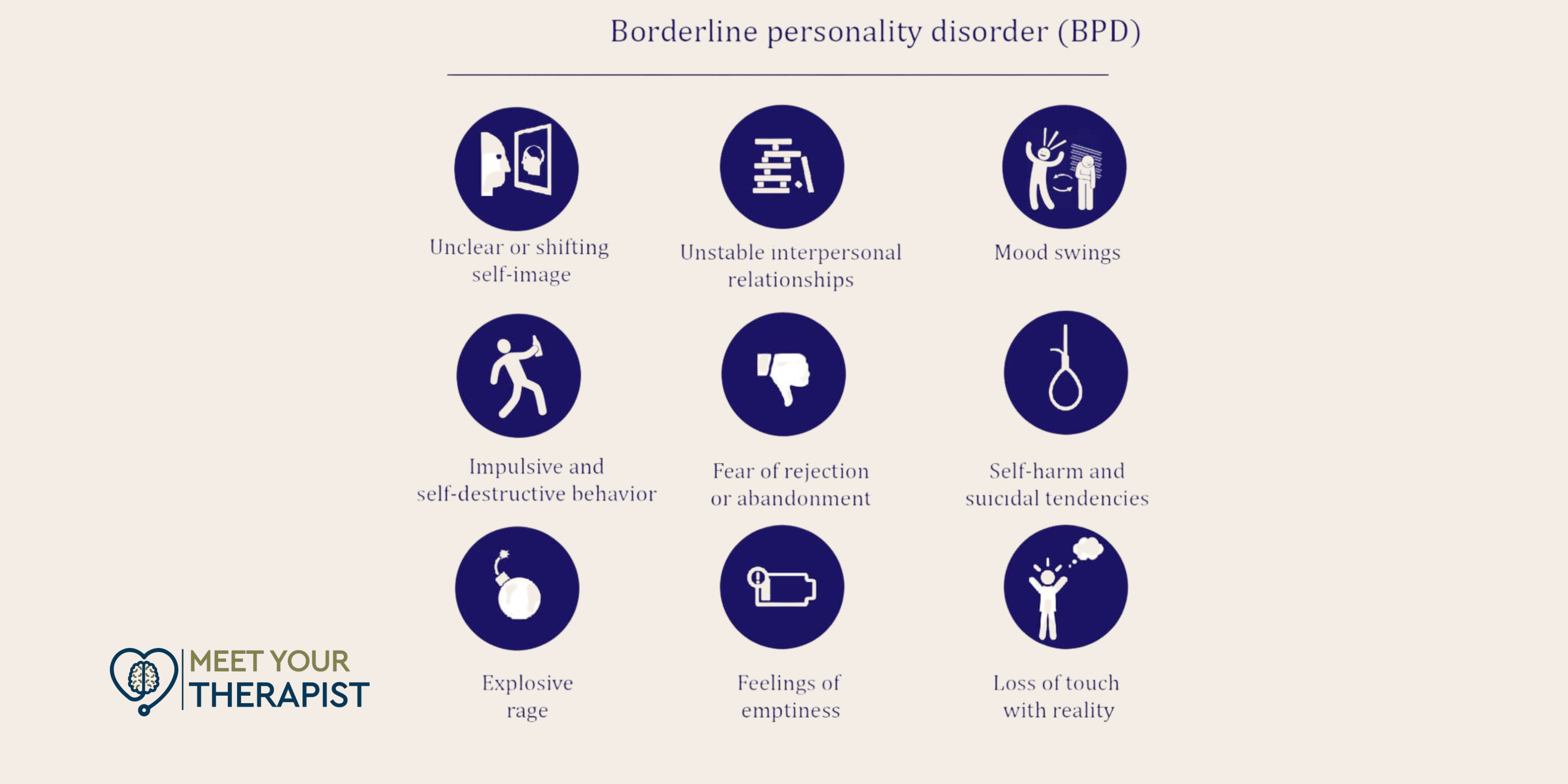
In Borderline Personality Disorder, emotional dysregulation is considered one of the central features of the condition. According to the DSM-5 (Diagnostic and Statistical Manual of Mental Disorders), BPD involves a pattern of instability across several areas of life. These may include:
- Intense fear of abandonment
- Unstable or rapidly shifting relationships
- Fluctuating self-image or identity
- Impulsive behaviours such as spending, substance use, or risky actions
- Intense emotional reactions and mood shifts
- Chronic feelings of emptiness
- Difficulty controlling anger
- Stress-related paranoia or dissociation
It is important to note that experiencing emotional dysregulation does not automatically mean someone has BPD. Many people struggle with regulating emotions without meeting the full diagnostic criteria. However, individuals who relate strongly to these patterns often describe a similar internal experience: emotions that feel bigger, faster, and harder to manage than those of others around them.
The Biosocial Model: Understanding Why Emotions Become So Intense
Psychologist Marsha Linehan, the creator of Dialectical Behaviour Therapy (DBT), proposed what is known as the biosocial model of Borderline Personality Disorder.
According to this model, emotional dysregulation develops through the interaction of two major factors:
- HBiological emotional sensitivity
- Invalidating environments
This combination can shape how individuals learn to experience, interpret, and respond to their emotions.
Emotional Sensitivity, Intensity, and Slow Recovery
Some people are naturally born with more emotionally reactive nervous systems. Research in neuroscience has shown that individuals with BPD often display heightened activity in the amygdala, the brain structure responsible for detecting emotionally significant events and potential threats. The amygdala functions as an alarm system. When it is highly sensitive, even subtle emotional cues can trigger strong internal reactions.
At the same time, research suggests that individuals with BPD may show reduced regulatory activity in the prefrontal cortex, the brain region responsible for impulse control, reasoning, and emotional regulation. In practical terms, this means that emotional signals may become very intense very quickly and that the brain systems responsible for calming those emotions may activate more slowly. The result is an emotional experience that can feel overwhelming and difficult to control.
Emotional Sensitivity, Intensity, and Slow Recovery
Emotional dysregulation in BPD is described through three key characteristics:
- High emotional sensitivity
- High emotional intensity
- Slow return to emotional baseline
Someone with high emotional sensitivity may notice subtle changes in social interactions that others might overlook a shift in tone, a pause in conversation, or a delay in responding to a message. Because the emotional system is highly responsive, these cues can quickly trigger powerful emotional reactions.
Once the emotion is activated, the experience may feel intense and consuming. Anger may feel explosive, sadness may feel overwhelming, and anxiety may escalate rapidly. Finally, it often takes longer for the emotional system to calm down again. Even after the original situation has passed, the emotional response may continue for hours or longer. This pattern can make daily life feel emotionally unpredictable and exhausting.
Why Interpersonal Rejection Feels Especially Painful
For many individuals with BPD, emotional distress is closely connected to interpersonal relationships. Research on rejection sensitivity suggests that some people become highly attuned to signs that they might be disliked, abandoned, or excluded. When someone has both high emotional sensitivity and a strong fear of abandonment, social situations can feel particularly intense. For example:
- A friend taking longer than usual to reply to a message
- A partner appearing distant or distracted
- A small disagreement within a relationship
- Feeling left out of a social event
Situations that others might interpret as minor or ambiguous can trigger powerful emotional reactions for someone who is highly sensitive to rejection. These reactions are not simply exaggerated responses. They are often the nervous system responding to perceived interpersonal threat a threat that may feel deeply connected to fears of abandonment or loss.
The Role of Early Emotional Environments
The biosocial model also emphasises the role of invalidating environments in shaping emotional regulation. An invalidating environment is one in which a person’s emotional experiences are regularly dismissed, criticised, or misunderstood. Instead of being acknowledged and explored, emotions may be labelled as “too much,” “irrational,” or “unacceptable.”
Common invalidating responses might include:
- “You’re being too sensitive.”
- “Stop overreacting.”
- “There’s nothing to cry about.”
- “You’re making a big deal out of nothing.”
When children grow up in environments where their emotional experiences are repeatedly minimised, they may not learn healthy ways of identifying, expressing, or regulating those emotions. Instead, they may begin to feel confused about their internal experiences. Emotions may become more intense, more unpredictable, and harder to manage.
Importantly, invalidating environments are not always intentionally harmful. Sometimes they arise in families where emotional expression was never modelled or where distress was discouraged as a coping strategy. Over time, however, the interaction between biological sensitivity and emotional invalidation can reinforce patterns of emotional dysregulation.
Understanding the Stigma Around Borderline Personality Disorder
Borderline Personality Disorder is one of the most misunderstood and stigmatized diagnoses in mental health. People with BPD are sometimes labelled as “manipulative,” “difficult,” or “attention-seeking.” These labels ignore the fact that individuals with BPD are often experiencing extremely intense emotional pain and instability. What may appear from the outside as dramatic or unpredictable behaviour is often the result of an emotional system that becomes activated very easily and struggles to return to baseline.
Reducing stigma begins with understanding. Emotional dysregulation is not a character flaw. It reflects a combination of neurological sensitivity, life experiences, and learned coping patterns. When these experiences are understood with compassion rather than judgement, it becomes possible to support meaningful change.
Emotional Regulation Can Be Learned
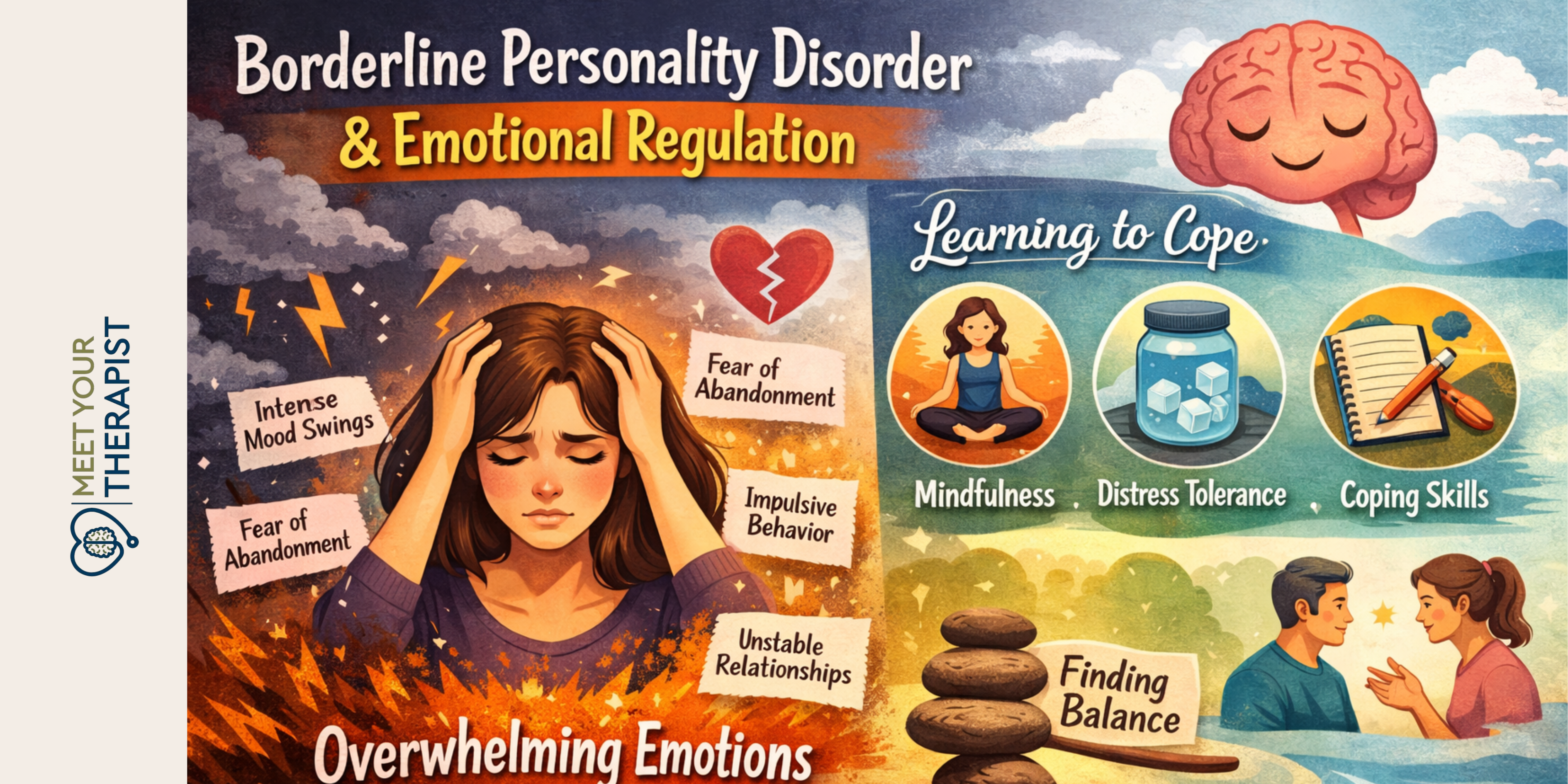
Although emotional dysregulation can feel overwhelming, research consistently shows that emotional regulation skills can be developed. One of the most effective treatments for BPD is Dialectical Behaviour Therapy (DBT). DBT focuses on helping individuals build practical skills for managing emotional intensity, tolerating distress, improving relationships, and developing mindfulness.
Through therapy, many individuals learn to:
- Recognise emotional triggers earlier
- Respond to distress without impulsive behaviour
- Build more stable and supportive relationships
- Develop healthier ways of understanding and managing emotions
Learning emotional regulation does not mean eliminating emotions. Instead, it means developing the ability to experience emotions without being controlled by them.
When to Consider Seeking Support
If you recognise yourself in the patterns described here intense emotional reactions, sensitivity to rejection, difficulty calming down after distress, or unstable relationship patterns speaking with a mental health professional can be an important step.
A trained therapist can help you explore whether these experiences relate to Borderline Personality Disorder or other forms of emotional dysregulation, and guide you toward strategies that can help stabilise emotional responses.
At Meet Your Therapist, our psychologists work with individuals who experience intense emotional patterns and interpersonal sensitivity. Using evidence-based approaches, therapy can help you better understand your emotional system and develop tools to navigate it more safely and effectively.
Living with intense emotions can be challenging but with the right support, those emotions can become more manageable, understandable, and less overwhelming.