How CBT Works for Anxiety: What It Is, What Happens in Therapy, and Does It Really Help?
25th February, 2026 | By: Soumya Singh
If you struggle with anxiety, you’ve probably wondered: What therapy actually works for this? One of the most searched and recommended treatments is Cognitive Behavioural Therapy (CBT). Major mental health authorities such as the American Psychological Association and the World Health Organization recognize it as an evidence-based therapy. But many people still feel unsure about it because they don’t know what happens in sessions, how it works, or whether it’s right for them.
Anxiety can feel confusing and overwhelming, especially when your thoughts, body, and emotions all react at once. The good news is that CBT is designed specifically to help you understand and manage those reactions in a structured, practical way. It’s not about “just thinking positive” – it’s about learning how your mind works and changing patterns that keep anxiety going.
In this blog, we’ll break down the science behind morning anxiety, the psychological factors that fuel it, and practical strategies you can use to start your day with more calm and control.
In this blog, you’ll learn exactly how CBT works for anxiety, who it helps, what sessions look like, how long it takes, and common myths people believe about it.
What Is CBT?
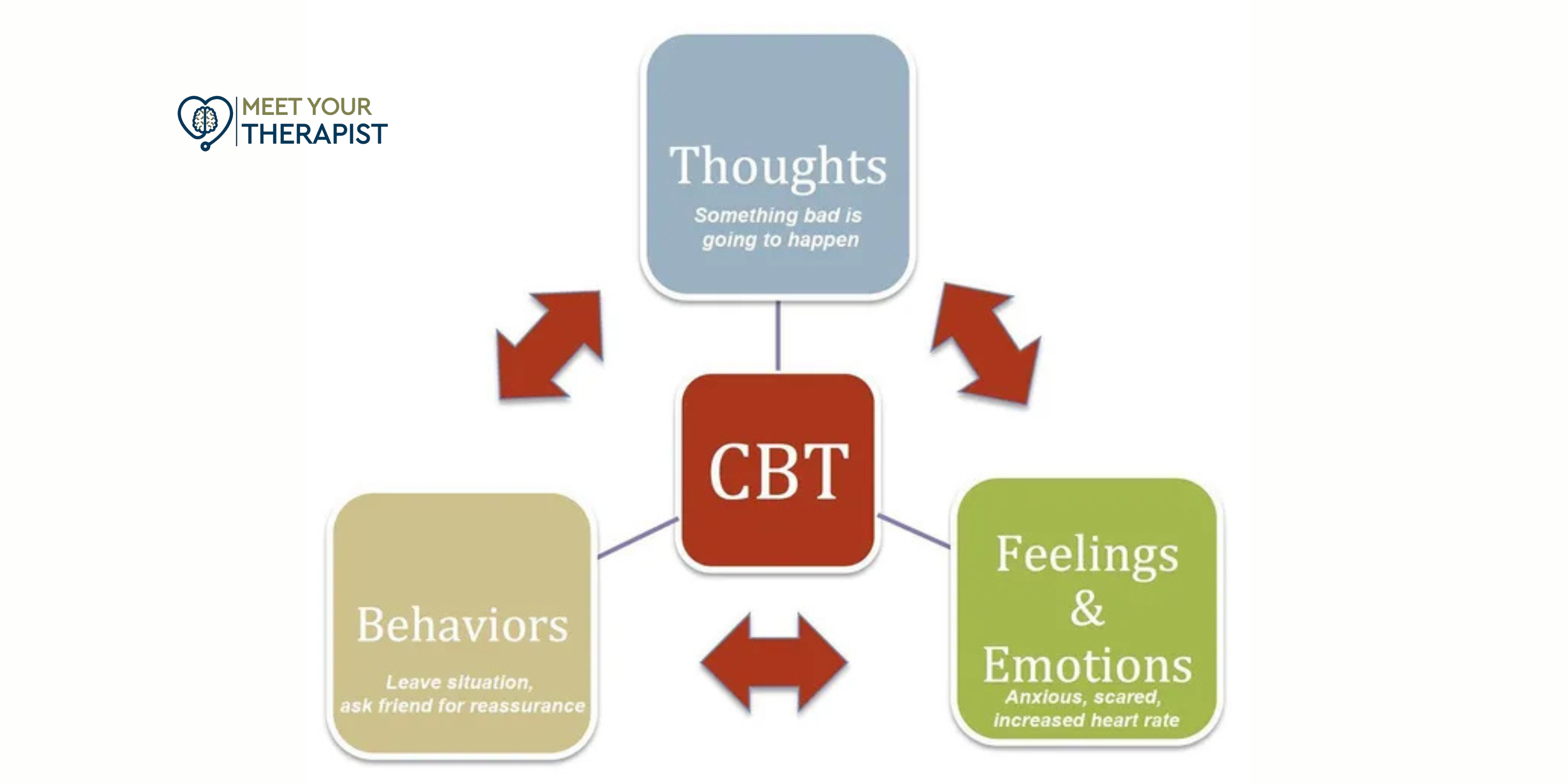
Cognitive Behavioural Therapy is based on one powerful idea: our thoughts, emotions, and behaviours are connected. When anxious thoughts appear, they influence how we feel and what we do. If someone constantly thinks, “Something bad will happen,” their body reacts with fear and they may start avoiding situations.
CBT helps people notice these patterns and gently change them. Instead of forcing positivity, it teaches realistic thinking and practical coping skills. Over time, the brain learns that situations it once labelled as “dangerous” are actually safe.
Who Is CBT Helpful For?
CBT works well for people who struggle with:
- Overthinking and constant worry
- Panic attacks or sudden fear episodes
- Social anxiety or fear of judgment
- Health anxiety
- Phobias or specific fears
It is suitable for teenagers, adults, and older individuals who are willing to actively participate and practice techniques between sessions. However, if someone is in immediate crisis or unable to engage in structured exercises, additional or alternative support may be recommended alongside CBT.
How CBT Works for Anxiety
CBT is active and collaborative. Sessions usually involve understanding triggers, identifying thought patterns, and gradually testing fears in real life. Instead of just discussing problems, the therapist helps you experiment with new ways of thinking and responding.
For example, imagine someone who fears public speaking. They might avoid presentations, which reduces anxiety temporarily but reinforces fear long term. In CBT, they would slowly practice speaking in safe steps – maybe first in front of a mirror, then with one person, then a small group – until their anxiety reduces naturally. This process teaches the brain that the situation isn’t actually dangerous.
What Happens in CBT Sessions?
A typical CBT process often includes:
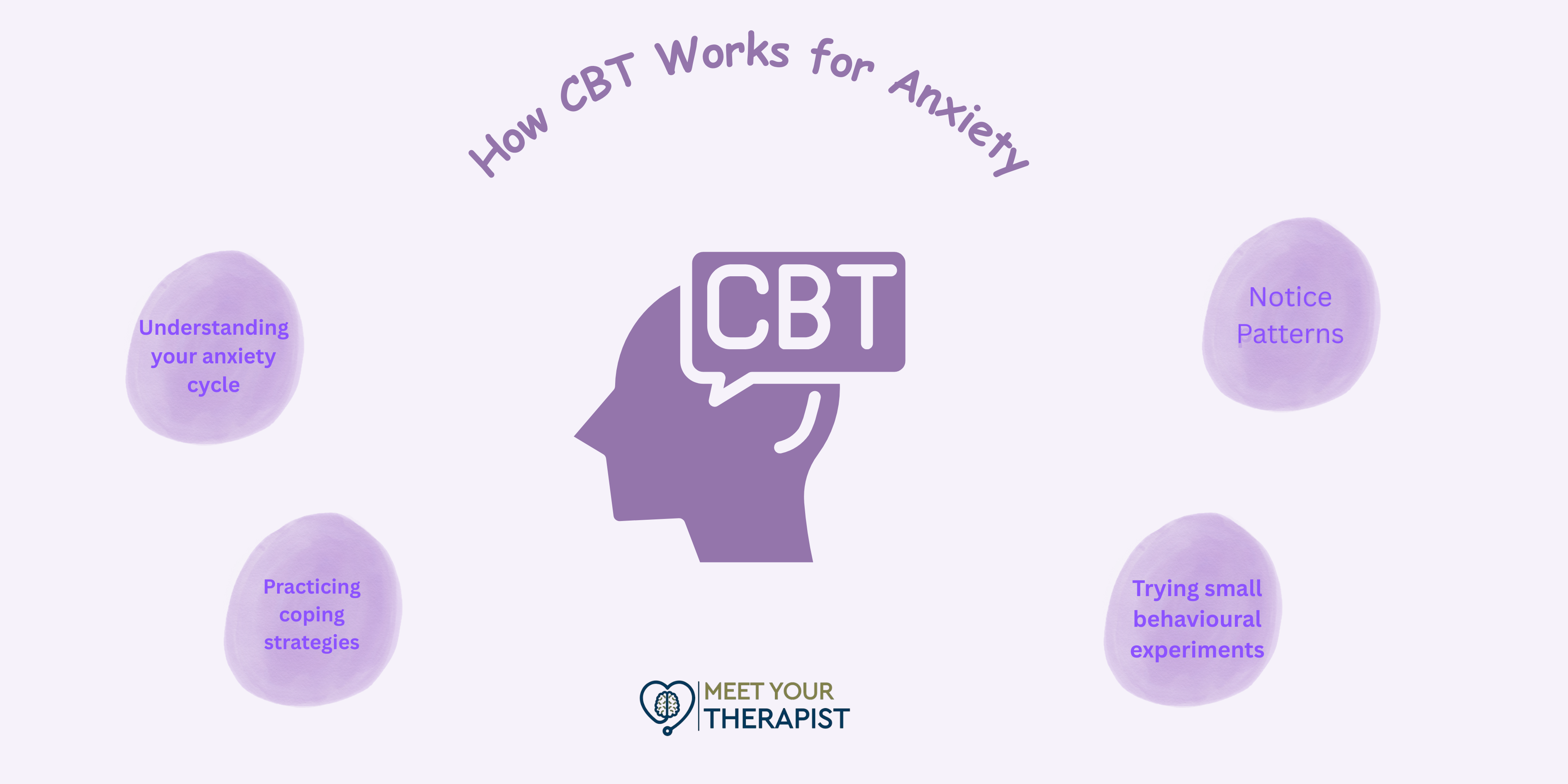
- Understanding your anxiety cycle (thought → feeling → action)
- Learning how to question anxious predictions
- Practicing coping strategies like breathing or grounding
- Trying small behavioural experiments between sessions
Sessions feel structured but supportive. Many people find comfort in knowing exactly what they’re working on and why.
Is CBT Safe and Effective?
CBT is considered one of the safest and most effective psychological treatments because it is non-invasive, skill-focused, and backed by decades of scientific research. Rather than creating dependency on therapy, it teaches tools you can continue using independently for life.
.Research consistently shows that people who complete CBT often experience reduced anxiety symptoms, improved confidence, and lower relapse rates compared to those who receive no treatment.
How Long Does CBT Take?
CBT is designed to be goal-oriented and time-limited. Many anxiety treatment plans last between 8 and 20 sessions depending on severity and complexity. Some individuals notice small improvements within just a few weeks, especially if they regularly practice techniques outside sessions.
Progress is usually gradual, not instant. CBT focuses on steady change that lasts rather than quick fixes that fade.
Common Myths About CBT
Many people hesitate to try therapy because of misconceptions.
- Myth: CBT is just positive thinking.
- Reality: It teaches balanced, realistic thinking.
- Myth: Talking about fears makes them worse.
- Reality: Understanding fears actually reduces them.
- Myth: Therapy is only for severe anxiety.
- Reality: Early help often leads to faster recovery.
A Simple CBT Technique You Can Try Today
If anxiety hits suddenly, try this quick mental exercise:
- Write your anxious thought.
- Ask yourself: Is this 100% true?
- Replace it with a more balanced statement.
For instance “I’ll mess everything up” → “I might feel nervous, but I can handle it.”Practicing this regularly trains your mind to respond calmly instead of catastrophically. ”
CBT works for anxiety because it gives you practical tools, not just explanations. By learning how your thoughts influence emotions and behaviours, you gain the ability to interrupt anxious cycles and replace them with healthier patterns. Over time, situations that once felt overwhelming become manageable, and confidence begins to grow.
Anxiety is not a life sentence – it is a treatable condition. With the right guidance, patience, and practice, meaningful change is absolutely possible.