Exposure Therapy: Facing Fear Safely
21st February, 2026 | By: Shreya N Bharadwaj
Remember the last time you avoided something because it made you anxious? Maybe it was a crowded room. A phone call. A difficult conversation. A hospital corridor. A stage. A memory. Avoidance feels relieving in the moment. Your heart slows down. The tension drops. You feel safe again.
But here’s the part we don’t always notice: every time we avoid a fear, we quietly teach our brain that the fear was right. Exposure therapy is built on a simple but powerful idea: what we avoid grows. What we face, gently and safely, shrinks.
In a world where anxiety disorders are among the most common mental health concerns globally, learning how to approach fear in structured, supported ways can be life-changing. According to global mental health estimates, anxiety disorders affect hundreds of millions of people worldwide. In India, anxiety remains one of the most commonly reported psychological concerns among young adults.
Exposure therapy is not about throwing someone into their worst nightmare. It is about helping them reclaim power, step by step.
What Is Exposure Therapy?
Exposure Therapy is a psychological treatment used primarily for anxiety disorders, phobias, panic disorder, obsessive-compulsive disorder (OCD), post-traumatic stress disorder (PTSD), and social anxiety.
Over time, the fear response weakens. This process is called habituation, the nervous system learning that it does not need to stay on high alert.
Why Avoidance Makes Anxiety Worse
Imagine someone who is afraid of elevators. The first time they avoid stepping into one, they feel immediate relief, and their brain quietly reinforces the message: “Good. You survived.” But what the brain actually learns is that elevators are dangerous and avoidance was necessary for safety. The next time they encounter an elevator, the fear is stronger. Gradually, avoidance spreads beyond elevators to office buildings, malls, hospitals, and even travel. This is how anxiety slowly shrinks a person’s world. Exposure therapy interrupts this cycle by creating new learning. Instead of escaping, the person stays in the feared situation long enough to discover, “I felt anxious, I stayed, and nothing catastrophic happened.” Over time, this new experience weakens the old fear response and restores a sense of freedom.
The Science Behind Exposure
Our brain has an alarm system primarily involving the amygdala that detects threats. In anxiety disorders, this alarm becomes overly sensitive.
Exposure Therapy works through:
- Habituation – anxiety reduces naturally when we stay in a situation long enough.
- Extinction learning – the brain forms new memories that compete with fear memories
- Self-efficacy building – the person learns, “I can cope.”
Research consistently shows that exposure-based treatments are among the most effective interventions for anxiety disorders and OCD. They are considered gold-standard treatments in clinical psychology.
What Exposure Therapy Actually Looks Like
Contrary to popular belief, exposure is never about forcing someone into extreme fear. It is collaborative. Structured. Gradual. Therapists often create something called a fear hierarchy, a list of anxiety-provoking situations ranked from least distressing to most distressing.
For example, for social anxiety:
- Making eye contact briefly
- Asking a shopkeeper a question
- Making a phone call
- Attending a small gathering
- Giving a presentation
The client starts small. They stay in the situation long enough for anxiety to rise and then fall without escaping. Over time, the brain updates its fear response.
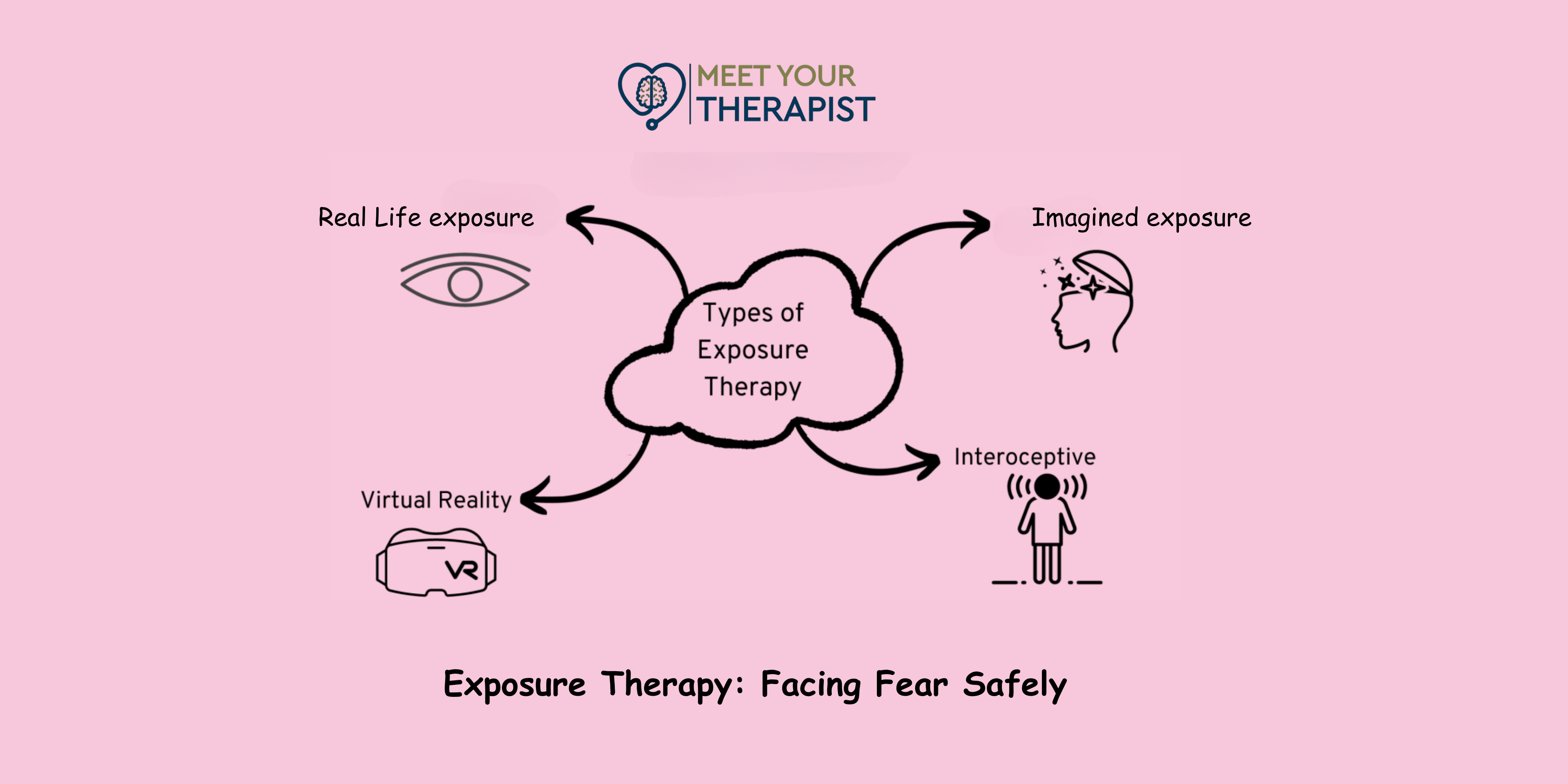
Different Types of Exposure
Depending on the concern, exposure can take different forms:
- In-vivo exposure – Facing feared situations in real life.
- Imaginal exposure – Visualising feared memories or scenarios (often used in trauma work).
- Interoceptive exposure – Intentionally creating feared physical sensations (like increased heart rate) to reduce panic sensitivity.
- Virtual reality exposure – Using controlled digital environments.
The goal remains the same: helping the nervous system learn safety.
Common Myths About Exposure Therapy
Common Myths About Exposure Therapy
- Myth 1: It retraumatises people :When done ethically and gradually by trained professionals, exposure is controlled and collaborative, not overwhelming.
- Myth 2: It’s about “just dealing with it : Exposure is structured therapeutic work, not emotional toughness training.
- Myth 3: Anxiety must disappear completely : The goal is not zero anxiety. The goal is reduced fear and increased functioning.
How Adults Can Support Someone Doing Exposure Work
Whether you are a parent, partner, friend, or therapist your response matters.Practical ways to support:
- Avoid rescuing too quickly: Jumping in reinforces avoidance.
- Encourage, don’t pressure: Exposure works best when the person feels in control.
- Praise effort, not outcome: Showing up is success.
- Model calm behaviour: Your nervous system influences theirs.
- Be patient with setbacks: Fear reduction is not linear.
Support does not mean removing discomfort. It means walking beside someone while they face it.
For Those Struggling With Fear
If you are reading this and feel trapped by anxiety, here is something important: Your fear makes sense. Your brain is trying to protect you. But protection is not always the same as safety.
You do not have to eliminate fear to live your life. You only need to learn that fear is survivable. Some reminders:
- Start small. Tiny exposures count.
- Stay long enough for anxiety to peak and settle.
- Expect discomfort, it’s part of the process.
- Track progress, not perfection.
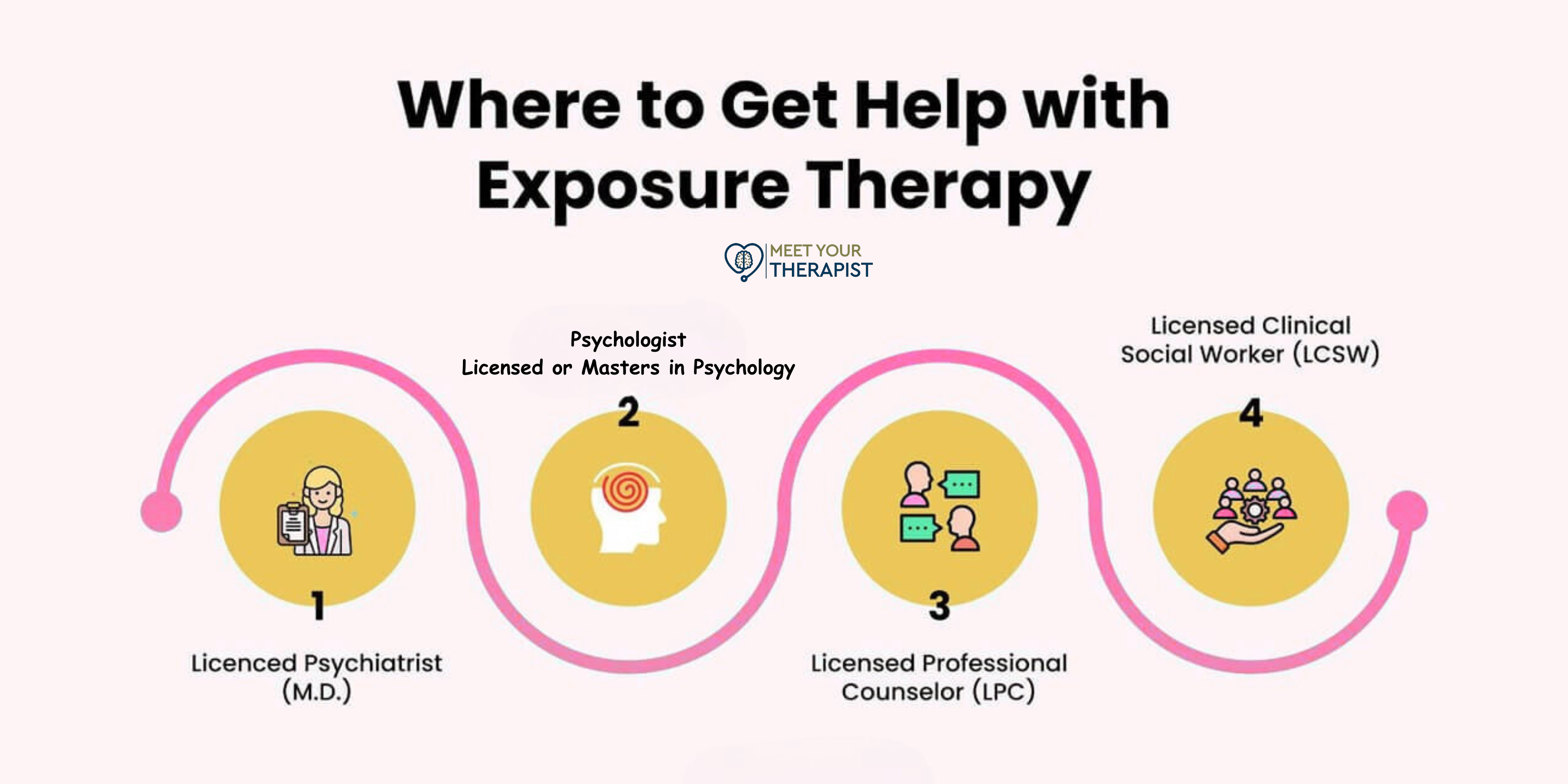
- Seek professional guidance when fears feel overwhelming.
You are not weak for being anxious. You are human. And your brain is capable of learning something new.
Facing Fear Safely Is an Act of Courage
Exposure Therapy is not dramatic. It is not glamorous. It is often quiet and repetitive. But it is powerful, Each time someone stays in a feared situation without escaping, they send a new message to their brain: “I can handle this.” Fear may shout. But courage whispers and then acts anyway. And over time, the whisper grows louder.