What to Say to a Child Before an Exam And What Not to Say
26th February, 2026 | By: Veola Noronha
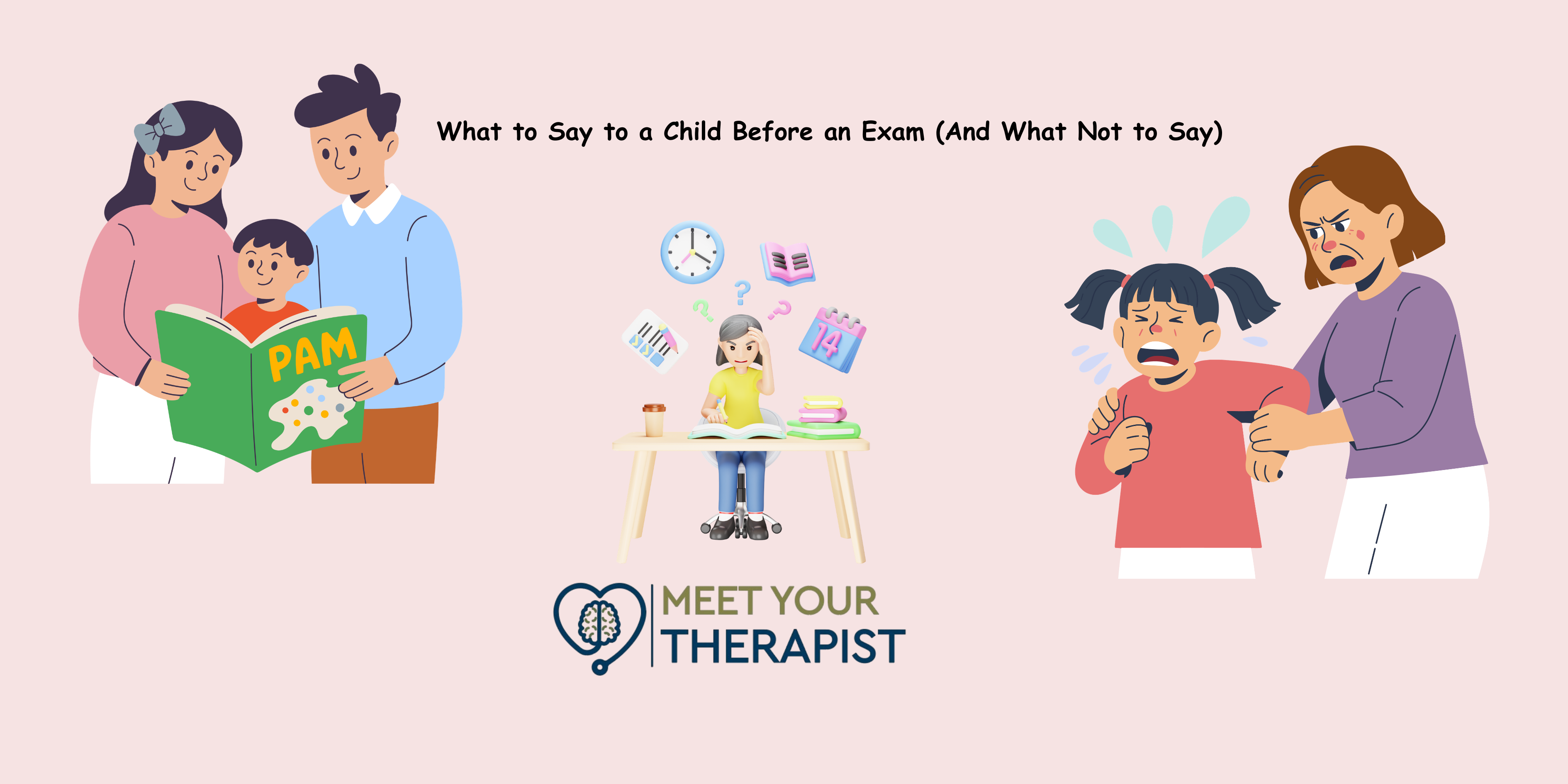
Exams are some of the worst memories many of us carry from childhood. Some of us still wake up in a cold sweat from dreams where we missed a paper or forgot everything the second we opened the question sheet. The body remembers that kind of panic long after school ends.
Now imagine being the child who is still living it.
Exams have a way of turning normal families into stress factories. Evenings get quieter. Reminders get louder. Everyone is suddenly on edge. The house starts to feel like a pressure cooker, and somehow even unrelated conversations become tense.
Children are battling things they don’t even have the language for- the fear that their brain will betray them, the nausea that kills their appetite, the dizziness from not eating properly, the terror of looking at a paper and recognising nothing. These aren’t overreactions. This is what an anxious nervous system feels like.
And for a child, an exam is rarely just about marks. It can feel like a test of intelligence. Of worth. Of whether they’re “serious enough” or “good enough”. Of whether they’re making you proud.
In this fragile space, what we say lands harder than we think.
Before an exam, children aren’t just revising chapters. They’re managing fear, expectation, comparison, and the very human desire to not disappoint the people they love. The goal isn’t to remove nerves completely- a little stress can help. But the wrong words can push that stress into panic.
So how do we show up without adding to the weight?
Exams Feel Bigger Than They Are
An exam measures knowledge. That’s it.
But to a child, it can feel like it measures who they are.
And children don’t always hear our words the way we mean them.
- “Just do your best” can sound like, “Don’t mess this up.”
- “You’ve studied so much” can translate to, “Now you better perform.”
- “This is an important exam” can feel like, “This decides everything.”
Most kids are already imagining worst-case scenarios. They don’t need another reminder of what’s at stake. What they really need is grounding.
They need to know that:
- One exam is not their identity.
- Performance is not the same as potential.
- Their worth does not fluctuate with marks.
When results become the only focus, children start linking achievement with approval- or even love. That link can become heavy very quickly.
What To Say Before an Exam
Keep it simple. You don’t need a speech.
- “I’m proud of the effort you’ve put in.”
- “It’s okay to feel nervous. That just means you care.”
- “Whatever happens, we’ll deal with it.”
- “Focus on one question at a time.”
- “Marks don’t change who you are.”
Because effort is within their control. Marks are not entirely.
Anxiety feels less scary when it isn’t treated like a flaw.
Notice the tone. Calm. Not dramatic.
Sometimes their brain just needs something small to hold onto.
They need to hear this more than we assume.
The most powerful thing you can offer before an exam isn’t motivation. It’s steadiness. If you are calm, they mirror that calm.
What Not To Say Before an Exam
Some sentences seem harmless. They aren’t.
- “Don’t disappoint us.”
- “Your cousin got 95%.”
- “If you don’t do well, you’ll regret it.”
- “This is very important.”
- “Why are you stressed? You studied.”
That turns love into a performance review.
Comparison doesn’t inspire. It threatens.
Fear shuts memory down. It doesn’t improve it.
They already know. Repeating it just increases the stakes.
Because anxiety isn’t logical. It’s biological.
They don’t need more intensity. They need someone who isn’t panicking with them. They already know it matters. What really helps is knowing that they matter more.
The Night Before Matters More Than The Morning Of
The night before sets the tone.
This is not the time for surprise revision marathons.
- Have a normal dinner.
- Tell them to sleep
- Keep the conversation light.
- Give them reassurance and a hug, if they’ll take one.
Exams are performance situations. Performance depends on rest and a regulated nervous system. Panic blocks recall. Calm supports it.
Children may eventually forget the marks they score. But they won’t forget how you made them feel when they were vulnerable.

After the Exam Is Just As Important
What you say after the paper can either close the stress loop — or stretch it out for days.
When they walk out of the exam hall, their nervous system is still buzzing. They’ve just spent hours concentrating, second-guessing, racing the clock. That is not the moment for interrogation.
Instead of:
- “How was it?”
- “How many mistakes did you make?”
- “What will you score?”
Try:
- “That’s over. How are you feeling?”
- “You made it.”
- “Want to talk about it now or later?”
- “Okay. Breathe. It’s finished.”
If they want to talk, listen. If they don’t, leave them be. If they say it went badly, resist the urge to either dismiss it or immediately dissect it.
Eat something. Go home. Watch something pointless. Let the house feel normal again. Reflection can happen later- when emotions aren’t right at the surface.
In that immediate window, what matters most is this: they showed up. They wrote the paper. They got through it.
Conclusion
Exams are stressful. That’s not new.
What matters is how a child feels while going through them.
You can’t take the paper for them. You can’t control the questions. But you can control the atmosphere at home. You can decide whether your words add pressure or reduce it.
Exams are temporary. The way you show up isn’t.
They’ll forget most of the papers they write. But they won’t forget how it felt to be supported while writing them.